Cane nesting tables — hand-woven rattan on solid-wood frames, built for export.
The warm, airy, in-demand look of woven cane in a space-saving, container-friendly set. We hand-weave natural cane and rattan onto kiln-dried sheesham, mango and acacia frames in Jodhpur — legally sourced, FSC and EUDR-ready, finished to your spec, and shipped from a single trial order up to repeat container volumes.

A woven, space-saving set that photographs beautifully and ships dense.
A nesting set already earns its place in any load — a graduated pair or trio that tucks together, moves freely around a sofa or café floor, and takes little space in the apartment it ends up in. Weave cane into that silhouette and it becomes a hero piece: the open hexagonal pattern lets light and line of sight pass through, so even in a small living room the set reads as light rather than bulky — exactly why cane sits at the heart of the coastal, boho, Japandi and modern-organic ranges buyers cannot keep in stock. But a side table still takes drinks, lamps and the occasional dropped mug, so weave alone will not do. We build every table as a true composite: a kiln-dried solid-wood frame carries the load while hand-woven cane forms a webbing-inset top under protective glass, an open lower shelf or a wrapped apron. You get the look your merchandising wants, the strength your returns rate needs, and — because rattan is a fast-maturing non-timber forest fibre — a genuine sustainability story to print on the label.
What a woven cane nesting set gives your range.
| Attribute | Cane nesting table characteristic |
|---|---|
| Construction | Composite — kiln-dried solid-wood frame (sheesham, mango or acacia) with hand-woven cane inset top, lower shelf or wrapped apron |
| Load path | Timber frame carries the load; cane and rattan carry the surface and look, never the weight |
| Configuration | Set of 2 or set of 3, graduated so each table tucks beneath the next |
| Weight | Light for its size — easy to lift, re-position and merchandise; lower freight weight than an all-timber set |
| Look & weave | Open hexagonal French cane, closed weave or wrapped rattan; warm honey tone, fine even grain, visible nodes on poles |
| Durability | Daily indoor living-room and café use; reinforced frames and double-woven panels for hospitality and contract |
| Best setting | Indoor or covered / shaded lounges, lobbies and verandas; synthetic weave for open-air and poolside |
| Sustainability | Rattan matures in a few years and regrows from the same plant; FSC chain-of-custody and Vriksh on the frame; EUDR-ready |
| Finishes | Frame oiled, waxed or lacquered; cane in natural, honey, cognac, black or white-wash — all CARB / TSCA-compliant |
Weave density, cane tone and frame wood all change the final look, so we recommend approving a physical set before production. Request a cane nesting table sample and we will send weave, finish and frame references for your range. For the full fibre profile — cane versus rattan versus wicker, natural versus synthetic — see the cane & rattan material guide.
Pair or trio, inset-top or open-shelf — matched to your layout.
Graduate the set so the tallest table clears a sofa arm and each one below steps down in height and width to nest cleanly. Every dimension is an indicative starting point; we build to your exact specification, weave pattern and step for contract and private-label programmes.
| Configuration | Largest table | Height range | Typical use |
|---|---|---|---|
| Set of 2 | Top ~45–55 cm wide | ~50–60 cm stepped | Compact apartments, bedside pairs |
| Set of 3 | Top ~50–60 cm wide | ~55–65 cm stepped | Living rooms, lounges, flexible seating |
| Round / drum tops | ~40–50 cm dia | ~55–65 cm stepped | Child-safe corners, boutique lobbies |
| Cane-under-glass top | To spec | Stepped to set | High-use surfaces, café and hospitality |
Build options
Cane-under-glass inset top, open woven lower shelf, or wrapped-rattan apron on a solid-wood frame — or a cane panel paired with a slim powder-coated iron or hairpin base. Choose turned, tapered or splayed legs, and open French cane or closed weave to your density.
Finishes
Frame in natural oiled, waxed, sealed matt or satin lacquer, plus stains, limed, whitewashed, hand-distressed and two-tone looks; cane in natural, honey, cognac, black or white-wash — all in CARB / TSCA Title VI formaldehyde-compliant formulations.
Packing & shipping
Sets nest to ship dense, with knock-down (flat-pack / RTA) legs where the design allows to protect the weave and cut freight and breakage. Carton, retail-ready, Amazon-FBA-ready or branded packaging; ISPM-15 heat-treated export packing, shipped FOB or CIF from Mundra / Nhava Sheva.
Cane sets documented for every market you sell into.
The woven cane is a renewable non-timber forest fibre, so legality compliance centres on the solid-wood frame beneath it — and that is where our paperwork does the work. Every cane nesting set ships with FSC chain-of-custody on request, Vriksh timber-legality verification, and EUDR-ready geolocation and deforestation-free due diligence. We provide US Lacey Act declaration support, UK Timber Regulation coverage, and CARB / TSCA Title VI formaldehyde-compliant finishes, with social and quality assurance under SEDEX / SMETA, ISO and SGS inspection, and ISPM-15 heat-treated export packing. Certificate references go directly to serious buyers — never published.
| Area | Our standard |
|---|---|
| Frame timber legality | Vriksh verified · CITES-compliant sheesham |
| Frame sustainability | FSC chain-of-custody · reclaimed options |
| EU market | EUDR-ready · geolocation · UKTR |
| US market | Lacey Act support · CARB / TSCA finishes |
| Social & quality | SEDEX / SMETA · ISO · SGS inspection |
| Export packing | ISPM-15 heat-treated · flat-pack options |
How to keep a woven set selling for years.
A well-made cane nesting set ages gracefully, and the care is simple enough to print on your customer card. The solid-wood frame is kiln-dried to stable moisture before joinery, so it stays tight under daily loading; dust it with a soft dry cloth and wipe with a barely-damp one, keeping standing liquid off the timber. The cane weave needs only a soft brush or a vacuum nozzle run across the open panels to clear dust. If cane webbing ever slackens over years of use, a light mist of water on the underside and natural air-drying tightens it again — a quick fix your retail customers appreciate. Keep natural cane out of direct, prolonged sun and away from radiators and standing water, which fade and embrittle the fibre over time; a cane-under-glass top removes that worry on the most-used surface entirely. For hospitality and contract placements we reinforce the frame, double-weave high-wear panels and specify harder lacquers so each table holds up to commercial traffic. Full care and finish guidance ships with every order so your buyers give consistent advice.
Build the whole woven living-room story, not just the set.

Cane coffee tables
The matching woven centrepiece that anchors a coastal or modern-organic living set.
Explore cane coffee tables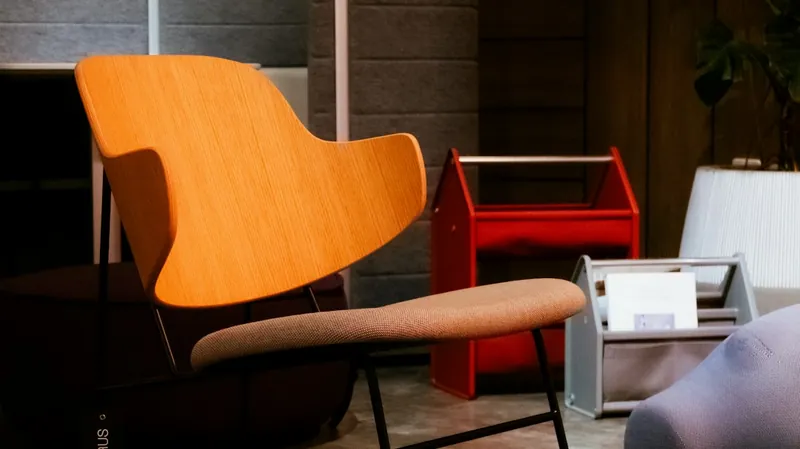
Cane accent chairs
Woven-back lounge and accent chairs in the same finish family to complete the room.
Explore cane accent chairs
All nesting tables
Compare cane with solid sheesham, mango, reclaimed-wood, marble-top and iron nesting sets.
Explore the nesting tables hubCane nesting tables consolidate beautifully with woven mirrors, trays, lanterns and pendant shades from our décor & accessories range, so a single container can carry a complete, coherent collection.
Cane nesting table sourcing, answered.
What is a cane nesting table set made of?
A cane nesting set is a graduated pair or trio of tables that tuck one beneath the next, each built as a composite: a structural frame in kiln-dried solid wood — sheesham, mango or acacia — carries the load, while hand-woven cane or rattan forms a webbing-inset top under glass, an open lower shelf or a wrapped apron. The timber frame does the work and the weave carries the look, so each table stays light enough to lift and stack with one hand.
Can cane nesting tables be shipped flat-pack or knock-down?
Yes. Because they nest, the set already ships dense, and where the design allows we supply knock-down or flat-pack (RTA) legs to protect the weave, cut freight cost and breakage, and lift container density further — ideal for large importers and online sellers. Assembled sets are supplied where the silhouette requires it, and we protect every woven panel in transit packing.
Are cane nesting tables strong enough for hotels and cafés?
Yes, when engineered correctly. We build each table on a kiln-dried solid-wood frame with mortise-and-tenon or dowelled joints, so static loads sit on the timber, not the weave. For contract and hospitality placements we reinforce the frame, double-weave high-wear panels, back open shelves with glass or cane-under-glass tops, and finish in hard-wearing CARB / TSCA Title VI-compliant lacquer.
What sizes and configurations do your cane nesting tables come in?
Sets ship as a pair or a trio, graduated so each table slides beneath the next. The largest table typically stands around 55–65 cm high with stepped heights and widths below it, and tops can be rectangular, square, round or free-form. Every dimension, weave density and step is made to your specification for contract and private-label programmes.
Are your cane nesting tables compliant for import into the US and EU?
Yes. The woven cane is a renewable non-timber forest fibre, so legality compliance centres on the solid-wood frame — where our paperwork does the work. We document FSC chain-of-custody and Vriksh timber-legality, handle Dalbergia sissoo (sheesham) in a CITES-compliant way, and ship EUDR-ready with geolocation and deforestation-free due diligence, plus US Lacey Act support, UK Timber Regulation coverage, CARB / TSCA finishes and ISPM-15 heat-treated export packing.
What is your minimum order for cane nesting tables, and can you private-label them?
A trial or sample set can ship LCL (part-container) so you approve the weave, cane tone, frame wood and finish first. For best wholesale pricing thereafter, one 20ft full container load is our standard minimum, and we consolidate cane nesting tables with cane coffee tables, side tables, accent chairs and décor into one mixed, compliant container. We work as ODM (our catalogue designs) and OEM (your drawings, weave pattern, finish and private-label or retail-ready packaging).
Sample the weave and finish, then ship from one container up.
Approve the weave, cane tone, frame wood and set size on a physical sample, then scale from a trial order to repeat container volumes on a 30–45 day lead time — QC-governed and documented for your market. Read the full fibre profile on the cane & rattan material guide, or compare woods and builds on the nesting tables hub.