Colonial sideboards & buffet cabinets, built for export buyers.
Anglo-Indian colonial sideboards in solid sheesham and teak — turned legs, panelled and glazed doors, brass cup pulls and campaign fittings, finished in honey, antique and dark-walnut tones. Order a trial sample LCL or a full container of mixed designs.

The Anglo-Indian buffet — formal, substantial, and still selling.
The colonial sideboard is a heritage classic: a long, panelled buffet cabinet drawn from British-colonial and Anglo-Indian cabinetmaking. It reads as warm and formal — solid dark hardwood, turned or tapered legs, raised-panel or glazed doors, a bank of drawers, and brass hardware that catches the light. It anchors a dining room as a buffet, a living room as a credenza, and a hotel as a reception or lobby cabinet. We build the whole vocabulary in Jodhpur on a genuinely solid-wood carcass, so the piece carries the weight, grain and longevity the style is known for.
The colonial signatures
Turned bobbin or tapered legs, raised-panel and glass-fronted doors, a drawer bank over cupboards, and brass detailing — cup pulls, ring handles, recessed campaign handles and corner caps. Dark, warm finishes complete the look.
Why the wood matters
Solid sheesham and teak give colonial pieces their dense weight, deep figured grain and decades of service. Dovetailed drawers, mortise-and-tenon framing and panelled backs — not veneered particleboard — are what let the style age into an heirloom.
Where buyers place it
Dining buffets and crockery cabinets, living-room credenzas, entryway and hallway cabinets, study and library storage, and hospitality reception or back-bar units. One construction platform, re-proportioned for each room.
Built on a solid-wood heart, dressed in brass.
The colonial look depends on three choices — the wood, the finish and the metalwork. We hold all three in-house, so a buyer can specify a focused collection or mix tones across a single container.
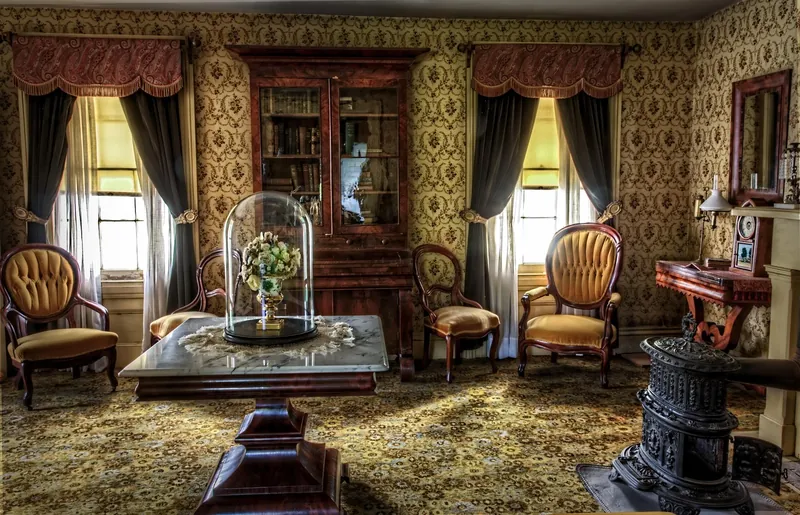
Sheesham Colonial
Dense Indian rosewood with rich figured grain — the classic hardwood for an Anglo-Indian buffet, in honey to dark-walnut stains.
Sheesham wood & sourcing
Teak Colonial
The quintessential colonial timber — stable, golden-brown and long-lived, ideal for premium and plantation-teak ranges.
Teak wood & properties
Brass fittings & campaign detail
Polished, antiqued or burnished cup pulls, ring handles, recessed campaign handles and corner caps — the metalwork that defines the style.
Brass hardware & metalwareStandard sizes & build — then made to your drawings.
The dimensions below are our common starting points for container ranges. As an OEM manufacturer we re-size, re-configure the door-and-drawer layout, change the leg profile and re-finish every colonial sideboard to your specification, hardware and private-label requirements.
| Attribute | Typical range |
|---|---|
| Width | 120 / 140 / 160 / 180 cm |
| Depth | 40–50 cm |
| Height | 80–90 cm |
| Doors | 2–4 panelled or glass-fronted |
| Drawers | 2–4 dovetailed, over cupboards |
| Legs | Turned bobbin · tapered · plinth base |
| Woods | Sheesham · teak · mango · reclaimed |
| Hardware | Brass cup pulls · ring · campaign · corner caps |
| Finishes | Honey · chestnut · antique · dark walnut (CARB/TSCA) |
| Construction | Assembled or knockdown / flat-pack (RTA) |
| Models | ODM catalogue designs · OEM to your drawings |
Documented timber, dense containers.
A colonial sideboard is a solid-wood piece, so timber legality decides whether your container clears. We ship each one with FSC chain-of-custody, Vriksh verification and CITES-compliant sheesham handling, EUDR-ready geolocation and deforestation-free due diligence, plus Lacey Act, UKTR, CARB/TSCA and ISPM-15 cover. Knockdown construction with removable turned legs and bolt-on tops maximises how many units fit a 20ft load — important for a heavy, high-cube category.
Care & finish note
Solid wood lives and breathes with humidity, so we kiln-dry timber to export moisture levels and seal every colonial sideboard with a protective finish. We advise your retail and hospitality clients to keep pieces out of direct heat and sun, wipe with a dry or lightly damp cloth, re-oil natural-finish surfaces periodically, and polish brass fittings gently to preserve the patina. Full care-and-assembly guidance ships with each order, and matching care labelling can be printed for retail-ready or branded packaging.
Colonial sideboard sourcing, answered.
What defines a colonial sideboard?
A colonial (British-colonial / Anglo-Indian) sideboard pairs solid dark hardwood — usually sheesham or teak — with turned or tapered legs, panelled or glass-fronted doors, and brass hardware such as cup pulls, campaign corner caps and recessed handles. The look is warm, formal and substantial, finished in honey, chestnut, antique or dark-walnut tones. We build the complete Anglo-Indian vocabulary on a solid-wood carcass.
Which woods and finishes do you use for colonial sideboards?
We build colonial sideboards in solid sheesham (Indian rosewood), teak and mango, with reclaimed wood for a heritage patina. Finishes run from natural oil and honey stain to antique distressed, chestnut and dark walnut, all CARB/TSCA formaldehyde-compliant. Brass fittings are polished, antiqued or burnished to match the finish.
What are standard colonial sideboard sizes and can you build to our drawings?
Common widths are 120, 140, 160 and 180 cm, around 40–50 cm deep and 80–90 cm high, with 2–4 panelled or glazed doors and a drawer bank. These are starting points: as an OEM manufacturer we re-size, re-configure and re-finish to your drawings, hardware and private-label spec.
What is the minimum order for colonial sideboards?
A trial or sample order can ship LCL (part-container). For best wholesale pricing thereafter, one 20ft full container load is our standard minimum, and we consolidate colonial sideboards with other furniture, metalware and décor into a single mixed container.
Can colonial sideboards ship flat-pack or knockdown?
Yes. We offer knockdown / flat-pack (RTA) construction with removable turned legs and bolt-on tops to cut freight and transit breakage for importers and online sellers, as well as fully assembled pieces for contract and hospitality fit-outs.
Are your colonial sideboards compliant for import into the US and EU?
Yes. We document FSC chain-of-custody, Vriksh timber-legality and CITES-compliant sheesham handling, are EUDR-ready with geolocation and deforestation-free due diligence, and support US Lacey Act declarations, UK Timber Regulation, CARB/TSCA finishes and ISPM-15 export packing.
Send a reference or your drawings — we'll quote a container.
Tell us the woods, finishes, hardware and quantities you need. We'll come back with FOB/CIF pricing, MOQs and lead times, produce a sample for approval, and ship it documented and ISPM-15 packed from Mundra or Nhava Sheva.