Reclaimed wood furniture vs new wood — how to choose the right timber.
Both are solid, both ship import-ready — but they behave differently on character, supply, consistency and sustainability. Here is how to match reclaimed and freshly-sawn wood to your range, your channel and your compliance file.

Two kinds of solid wood — and why the choice matters.
Almost every solid-wood furniture decision comes down to one fork: reclaimed timber or freshly-sawn new timber. Both are real wood, both can be built to export quality, and both can carry the same import paperwork. What separates them is where the board comes from — and that single fact shapes its grain, its supply, its cost and its sustainability story.
Reclaimed wood — also called old wood or salvaged wood — is solid timber recovered from structures and stock that have finished their first life: demolished buildings, old doors and window frames, roof beams, decommissioned boats, factory floors and railway sleepers. It is de-nailed, cleaned, re-sawn, kiln-dried to export moisture levels and re-milled into furniture-grade boards. The patina, saw marks and colour variation are genuine, not a factory-applied distress finish.
New wood is recently harvested, legally sourced solid timber — in India most often sheesham (Indian rosewood), mango, acacia or teak — kiln-dried and milled to spec. It delivers predictable grain, repeatable colour and the volume a scaling retail programme needs. Most buyers do not choose one forever; they choose the right wood for each line.
Reclaimed vs new wood, compared.
A quick-reference comparison for buyers, designers and merchandisers deciding which timber to put behind a range.
| Attribute | Reclaimed wood | New (freshly-sawn) wood |
|---|---|---|
| Source | Salvaged from old buildings, beams, doors, boats, flooring and sleepers — reprocessed, not freshly felled | Recently harvested, legally sourced solid timber, kiln-dried and milled to spec |
| Typical species | Varies by source — commonly old teak, sheesham, acacia and mixed tropical hardwoods | Selectable — sheesham, mango, acacia, teak, rosewood, rubberwood, pine |
| Grain & character | Pronounced, weathered; genuine patina, nail and saw marks — every board unique | Clean, consistent figure; uniform tone achievable across a batch |
| Colour matching | Managed by grading and blending — character, not uniformity, is the point | Repeatable across runs; close colour and finish matching for scaling ranges |
| Moisture stability | Excellent — decades-seasoned, then re-kiln-dried to export levels | Very good — kiln-dried to export moisture levels before milling |
| Durability | High — dense old-growth stock; suited to heavy-use and contract interiors | High for hardwoods like sheesham and teak; chosen to match the use |
| Supply & volume | Finite and batch-variable; best for capsule, hero and statement lines | Reliable at volume; best for repeatable core and high-turn ranges |
| Sustainability story | Reuse-led — no new tree felled; deforestation-free by definition | Responsible when verified — FSC chain-of-custody, Vriksh, EUDR-ready |
| Lead-time factor | Adds sorting, de-nailing and preparation time | Streamlined production within the standard 30–45 day window |
| Best-fit ranges | Industrial wood-and-iron, statement tables, bar and retail fixtures, décor | Dining, bedroom, living, office and outdoor core collections at scale |
Figures describe typical behaviour of export-grade stock; exact density, hardness and tone depend on species and salvage source. We confirm the material profile of each production batch on request.
Pick by the job the range has to do.
Choose reclaimed wood when…
You want authentic age and patina that distressing can't fake · you're building an industrial or heritage look that pairs with wrought iron · you need a genuine deforestation-free, reuse-led sustainability claim · you're launching a limited capsule, hero piece or statement fixture where board-by-board variation is a feature, not a fault.
Choose new solid wood when…
You're scaling a core collection that must reorder identically · you need close colour and finish matching across SKUs and seasons · you want to specify an exact species for density, tone or budget · you're committing to dependable, large, repeat container volumes and predictable lead times.
In practice the strongest programmes run both — a reclaimed signature line that earns attention and margin, backed by a new-wood core range that reorders cleanly. We help you match material to channel across the full solid-wood range, and go deeper on salvaged stock in our reclaimed wood material guide.
Does reclaimed really outlast new wood?
The honest answer: both last for decades when the timber is good hardwood and properly dried — the difference is where the stability comes from. Reclaimed hardwood has already done most of its moving, splitting and settling over its first life, so once re-kiln-dried it is exceptionally stable and resistant to further warp. That is precisely why cabinetmakers have always prized old stock.
New hardwood earns the same durability a different way: species selection and controlled drying. Kiln-dried sheesham and teak are dense, hard-wearing and dimensionally reliable, which is why they anchor commercial dining and hospitality ranges worldwide. The failure mode to avoid with either timber is under-drying, not age — so we re-dry all stock to export moisture levels and build with solid-timber joinery, whether the board started life last decade or last century.
Both routes clear customs — if the paperwork holds.
Reclaimed wood gives you the single strongest sustainability claim in furniture: no new tree is felled for the board. But a reuse claim only helps if it survives scrutiny at the port — and new timber needs its own legality trail. We document both the same way, so your sustainability story and your customs file agree.
That means FSC chain-of-custody where applicable, Vriksh timber-legality verification, and EUDR-ready due diligence with geolocation and deforestation-free declarations. We support US Lacey Act declarations, UK Timber Regulation (UKTR), CARB / TSCA Title VI formaldehyde-compliant finishes and ISPM-15 heat-treated export packing. CITES-compliant handling applies to any sheesham (Dalbergia sissoo) in the mix — reclaimed or new.
| Requirement | Our standard |
|---|---|
| Timber legality | Vriksh verified · CITES-compliant sheesham |
| Sustainability | Reclaimed reuse-led · FSC chain-of-custody |
| EU market | EUDR-ready · geolocation · UKTR |
| US market | Lacey Act support · CARB / TSCA finishes |
| Social audit | SEDEX / SMETA · ISO · SGS inspection |
| Export packing | ISPM-15 heat-treated · flat-pack options |
What actually moves the number.
Preparation labour
Reclaimed stock carries extra sorting, de-nailing, cleaning and re-sawing before it reaches the bench — real work that new, mill-ready timber skips. That shows up in lead time and cost more than the raw board does.
Supply & reorderability
New wood is available at dependable volume, so a core range reorders identically. Reclaimed supply is finite and batch-variable, which is why it fits capsule and hero lines rather than open-ended high-turn SKUs.
Freight & loading
Dense pieces in either timber travel best as knockdown / flat-pack — lower freight, denser container loading and less transit damage. See how we handle it in our flat-pack and knockdown guide.
Both timbers ship on the same competitive, cost-advantaged terms: a trial or sample order can ship LCL, best wholesale pricing starts at one 20ft full container load, and typical lead time is 30–45 days. We quote FOB or CIF from Mundra or Nhava Sheva.
How different buyers split reclaimed and new.
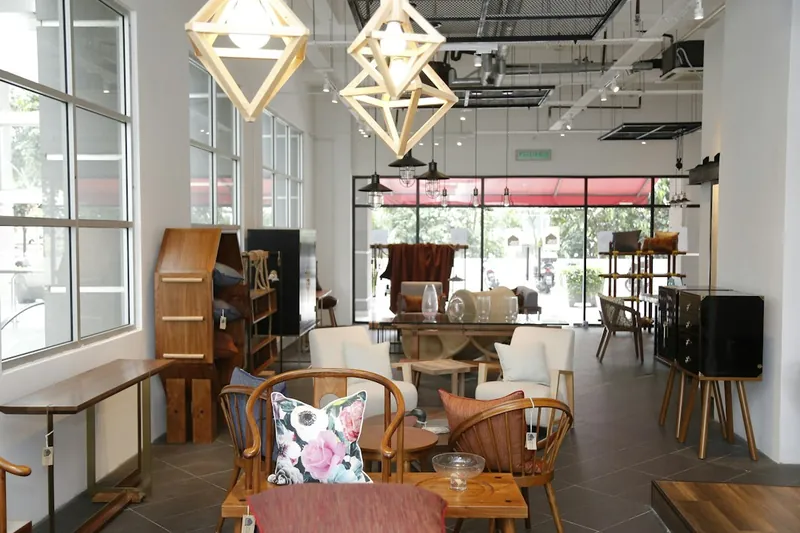
Retailers & importers
A reclaimed hero range for the window and the story; a new-wood core range for dependable reorders and colour-matched SKUs.
Explore the furniture range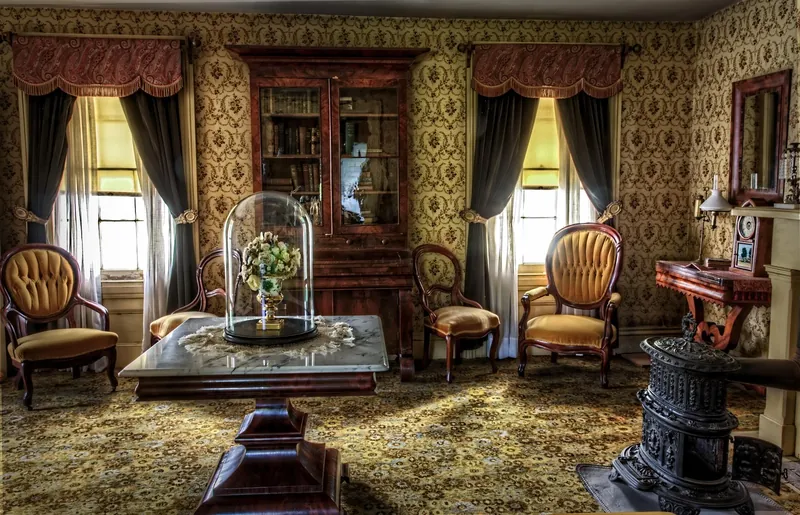
Designers & hospitality
Reclaimed timber for statement tables, bars and reception pieces where authentic character carries the interior; specified and sampled to spec.
Reclaimed wood material guidePrivate label & OEM brands
Choose the species per line — reclaimed, sheesham, mango, acacia or teak — produced to your drawings, finish and brand with sample approval.
Compare all wood materialsBuyer questions, answered.
What is the difference between reclaimed wood and new wood furniture?
Reclaimed wood furniture is built from solid timber salvaged and reprocessed from old structures — demolished buildings, beams, doors, boats and railway sleepers — then de-nailed, re-sawn and kiln-dried into furniture-grade boards. New (freshly-sawn) wood furniture is made from recently harvested, kiln-dried timber such as sheesham, mango, acacia or teak. The practical differences are character and supply: reclaimed stock carries genuine age, patina and board-by-board variation but is finite, while new wood gives uniform grain, repeatable colour and reliable volume.
Is reclaimed wood better than new wood?
Neither is universally better — it depends on the look and the volume you need. Reclaimed wood wins on authentic age, a deforestation-free reuse story and dense, long-seasoned stability, which suits statement and industrial ranges. New solid wood wins on consistency, exact colour and finish matching, and dependable large-volume supply, which suits repeatable retail collections. Many buyers run both: a reclaimed hero line alongside a new-wood core range.
Does reclaimed wood last longer than new wood?
Both last for decades when made from quality hardwood and properly dried. Reclaimed hardwood has already fully seasoned over many years, so it is dimensionally very stable and resists further movement. New hardwoods like sheesham and teak are equally durable once kiln-dried to export moisture levels and built with solid-timber joinery. We QC every piece and re-dry all stock to shipping moisture levels regardless of whether it is reclaimed or new.
Is reclaimed wood more sustainable than new wood?
Reclaimed wood reuses timber that already exists, so no new tree is felled for the board — the strongest single sustainability claim in furniture. New solid wood can also be responsible when it is legally harvested and verified: we document it with FSC chain-of-custody, Vriksh timber-legality verification and EUDR-ready due diligence, and support US Lacey Act declarations and UK Timber Regulation. Both routes are shipped with import-ready paperwork.
Which is cheaper to import, reclaimed or new wood furniture?
Pricing is quoted per order and depends on design, finish and volume rather than timber type alone. Reclaimed stock carries extra sorting, de-nailing and preparation labour and is supply-limited, while new wood is easier to produce at consistent volume. Both ship on the same competitive, cost-advantaged terms: a trial order can ship LCL, best pricing starts at one 20ft full container load, and dense pieces flat-pack to control freight.
Can I mix reclaimed and new wood in one container?
Yes. We consolidate reclaimed furniture, new solid-wood pieces, metalware and décor into a single mixed container with one compliance file. This lets you test a reclaimed capsule range alongside a proven new-wood core without committing separate shipments, and keeps freight efficient when you combine assembled and flat-pack goods.
Still deciding? Sample both and let the timber settle it.
Send us your drawings, references or target range and tell us the look you're after. We'll recommend reclaimed, new wood or a blend, quote FOB or CIF with MOQs and lead times, and produce a physical sample for approval before bulk production — all documented, import-ready and shipped by the container.